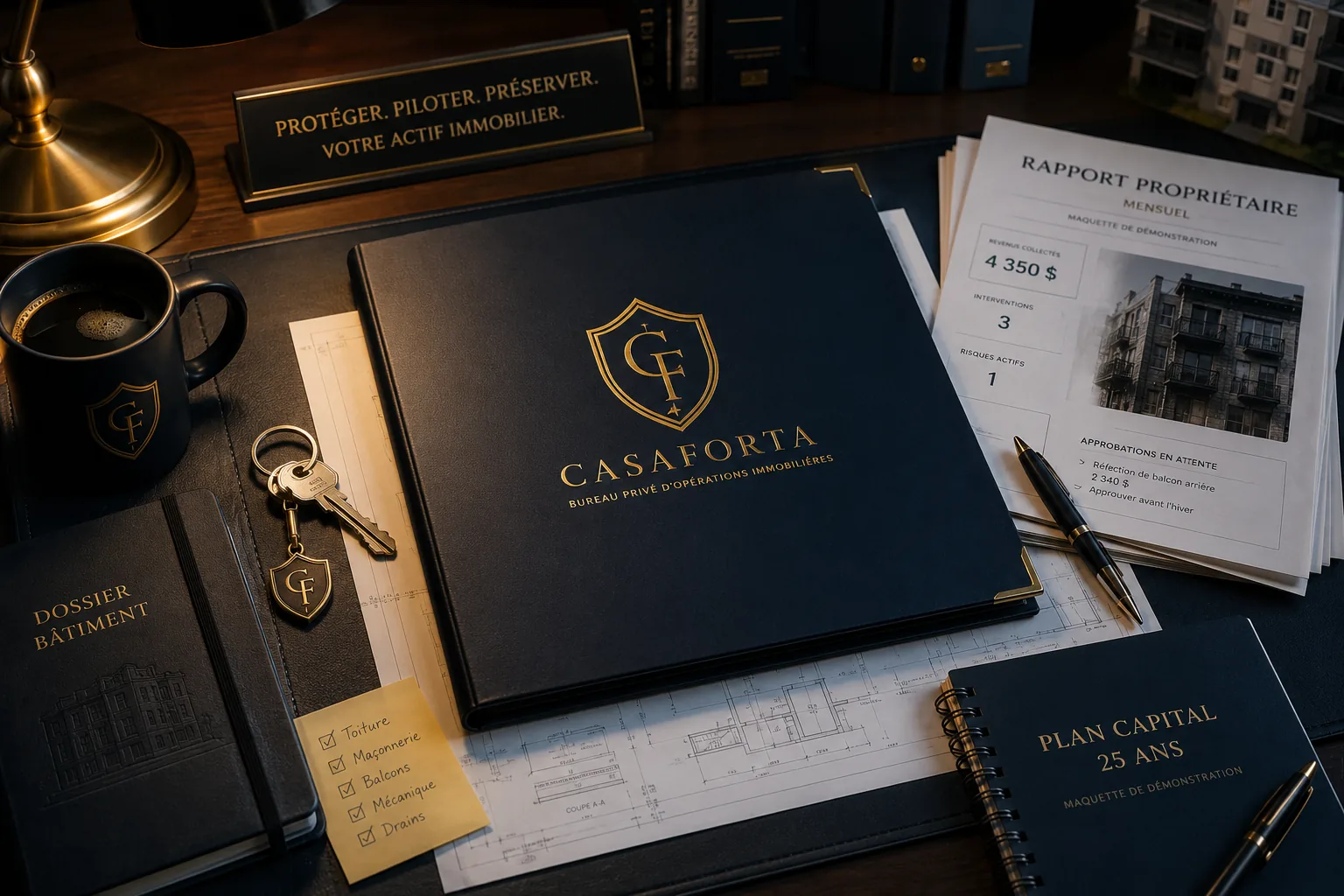
What the Building Passport is
The Building Passport is an operating record: structured, dated and designed to evolve with the building. It brings together what has been provided, observed and decided within the mandate and organizes it so information can be found and understood in context.
It is not a file store. The difference is structure: records are organized into known categories and dated; where relevant, they can be linked to the corresponding finding, decision or follow-up.
What the Passport does not claim to be is exhaustive. A building arrives with the history it has — sometimes substantial, often partial. The Passport makes that state visible rather than hiding it.
How the Passport is built and kept
When a Building Passport is established, it is first built from what already exists: leases, invoices, warranties, plans, inspection reports and contracts.
When it forms part of an ongoing mandate, it can then be maintained as operations progress: documents received, recorded decisions and completed follow-ups can be incorporated as they occur.
Three disciplines keep it readable over time:
- Dated naming — every item carries its date and a short description, to a consistent convention.
- Never overwritten — a superseded version is not deleted: it is identified as superseded and retained with its date.
- Gaps are recorded — where information was requested and not received, or an item could not be documented, that is written down as such. An absence stays an absence; it is never converted into “no problem found”.
The twelve structuring categories
The Passport is organised through a repeatable twelve-category structure, the same from one building to the next:
- Property profile
- Legal and ownership
- Insurance
- Leases and tenants
- Inspections and diagnostics
- Maintenance
- Quotes and contractors
- Invoices and warranties
- Photos
- Decisions
- Capital and reserves
- Monthly reports
The structure is constant; its contents are not. It does not mean every category holds documents, that any category is complete, or that two buildings carry the same documentary depth. What is missing from a category stays visible as missing.
How information is dated and preserved
Filed records follow a dated naming convention. Superseded versions are retained as such. Photographs are time-stamped and named according to a consistent convention; when they support a finding, the naming convention preserves that link.
What you receive
A structured, dated record with an index page that presents key building facts and the structure of the Passport.
When it forms part of an ongoing mandate, the Passport is maintained as operations progress rather than periodically rebuilt.
What the Passport is for
For a sale or refinancing, a structured and accessible record can help organize the information and supporting documents that may need to be provided.
In the event of a claim, a structured and accessible record can help organize the information and supporting documents needed for the claim process.
For condominiums, where applicable Bill 16 obligations require it, relevant information from the Building Passport can support the maintenance logbook and related follow-ups involving the appropriate professionals, according to the applicable mandate.
The Passport also helps preserve continuity over time by retaining the information, documents, decisions and follow-ups recorded in it — including when managers, contractors or insurers change.
The Passport and your other instruments
Information established through the Owner Clarity Diagnostic™ can later feed into a Building Passport™, where it can be organized alongside documents, decisions and follow-ups accumulated over time. The Diagnostic does not automatically create a Passport.
The Building Health Score™ produces a dated assessment of the conditions observed. When the two instruments are used together, that assessment and the supporting material can be preserved in the Building Passport to support continuity over time.
The Capital and reserves category can hold capital-planning information, the 25-Year Capital Snapshot™ and the reserve material attached to it. The 25-Year Capital Plan™ remains a separate instrument.
What the Passport is not
The Building Passport is not:
- an inspection or an engineering report;
- a certified appraisal;
- a code or regulatory compliance certification;
- the official maintenance logbook or the contingency-fund study — these are separate documents established, produced or reviewed in accordance with the applicable requirements by authorized persons;
- a legal opinion, an accounting audit or an insurance-coverage determination.
Nor is it guaranteed exhaustive, complete or continuously current, or sufficient on its own for any requirement of an insurer, a lender, a buyer or an authority.
Where it begins and where it ends
The Passport's scope is the scope of the written mandate, confirmed before work begins. It covers what was provided, observed and recorded within that scope. What was requested and not received, or could not be documented, stays recorded as such.
Missing information does not block every decision. It may reduce confidence, limit the scope of a recommendation, open a follow-up, or call for a qualified professional's opinion — and it stays explicit in every case.
When a condition falls outside its scope or requires specialized expertise, CASAFORTA recommends consulting the appropriate qualified professional.
Access, confidentiality and handover
The owner retains access to the building information and documents subject to the applicable rights, confidentiality obligations and mandate terms. Export or handover terms depend on the mandate and the nature of the records involved.
Some material — particularly material concerning third parties — remains subject to the confidentiality obligations that apply to it.
The Passport and monthly reporting
Where monthly reporting is part of the mandate, the Building Passport provides an evidence layer that helps connect material statements and follow-ups to the documents, photographs, observations and recorded decisions that support them.